
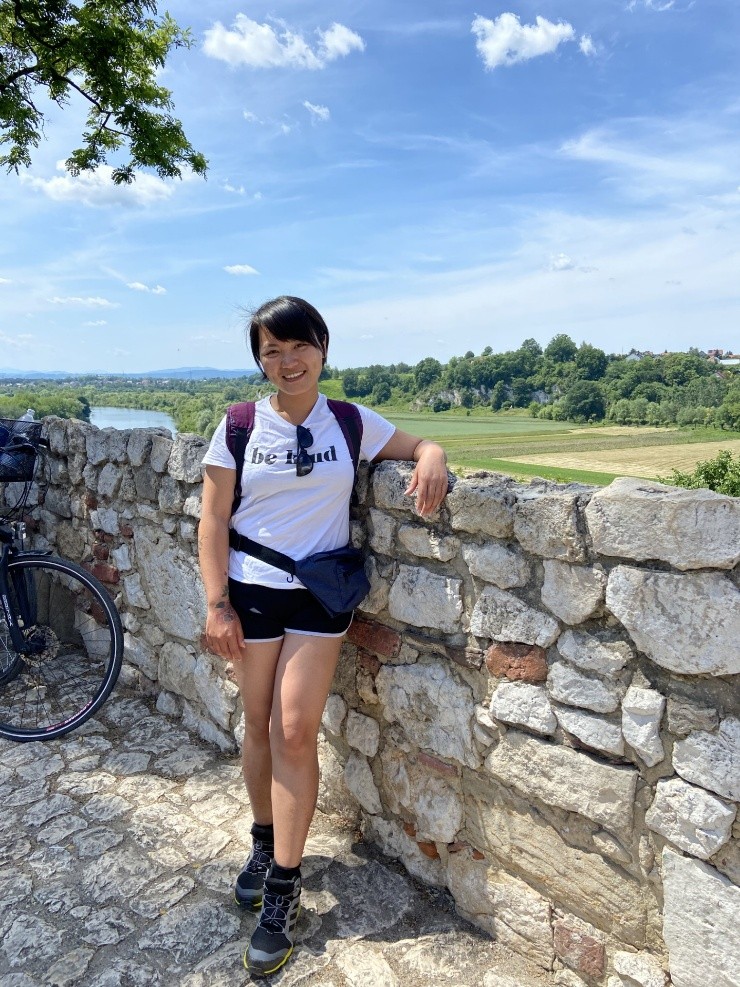

Nationality: Vietnamese
Background: I’m originally from Vietnam and have had the opportunity to study and work across several countries. I completed my master’s degree in chemistry at the University of St Andrews before working as a Research Assistant at the University of Sydney, where I gained experience in peptide synthesis and synthetic method development. I then joined RYVU Therapeutics in Poland, working in both medicinal and process chemistry, where I developed expertise in small-molecule synthesis, reaction optimisation, and process development. These experiences introduced me to chemistry from different perspectives and strengthened my interest in understanding how molecular design can be translated into solutions for real biomedical challenges. I’m now excited to begin this next chapter at the University of Strathclyde as part of the MIPrecise network.
My research interests: My research interests lie at the interface of synthetic chemistry, molecular recognition, and functional materials for biomedical applications, I enjoy understanding how subtle changes in molecular structure influence function and how these principles can be applied to solve challenges in healthcare. Through my PhD, I am particularly interested in learning how molecularly imprinted polymers can be designed to selectively recognise disease biomarkers in complex biological samples, contributing to earlier and more accessible diagnostics.
My PhD goals: My goal during this PhD is to develop expertise in polymer chemistry, biomolecular recognition, and affinity materials while building on my background in synthetic and medicinal chemistry. I hope to deepen my understanding of how chemistry can be translated into functional diagnostic technologies that have real clinical impact. Looking further ahead, I would like to work at the interface of chemistry, materials science, and biomedicine, contributing to research that advances precision medicine and improves human health through innovative molecular design.
My hobbies:My hobbies are cooking, chess, hiking, dancing.
My project in MIPrecise: MIP and nanoMIP-based binders targeting SCLC biomarkers
Master thesis: Use of ammonium elongate chemistry for stereoselective Michael addition-cyclisation
The ability of chiral isothiourea catalysts to promote the formal [4+2] cycloaddition of carboxylic acid derived ammonium enolates with different Michael acceptors has been examined. The isothiourea-mediated intermolecular Michael addition-cyclisation of an arylacetic acid bearing an unprotected heteroatom with suitable Michael acceptors to give novel anti-dihydropyranones has been shown to proceed with excellent yield (up to 93%) and high diastereoselectivity (up to >95:5). A major limitation of this process is the low enantioselectivity of the desired product. Efforts to optimise the protocol for improvement in enenatiocontrol have been detailed within the thesis. The influence of the temperature, external base, reaction time and different substrates have been investigated. The enantiomeric excess (up to 20% ee) of the reaction, however, could not be significantly improved due to the presence of non-catalysed background reaction.